Monday, 12 August 2013

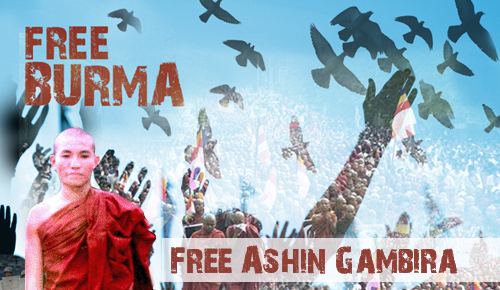
Ashin Issariya is one of the young Buddhist monks who, in September, 2007, led peaceful demonstrations in Burma that were crushed by the country’s military regime.


Ashin Issariya is one of the young Buddhist monks who, in September, 2007, led peaceful demonstrations in Burma that were crushed by the country’s military regime. I met him a few months later, in a sweltering monastery in Rangoon, where he had gone to hide from the authorities. Following the custom of many Burmese, he had adopted a pseudonym, King Zero, while underground. By then, many of his friends had been arrested. Restrained and bookish, he was still trying to organize his fellow-monks. “Democracy is something similar to the Buddha’s teachings,” he told me. Poverty and oppression have made Burma’s monks anything but otherworldly—they are among the regime’s most determined opponents. In late 2008, Ashin Issariya exchanged his saffron robe for civilian clothes and fled the country, one step ahead of arrest. He is now among the two hundred thousand Burmese refugees living in Thailand.
In May, Human Rights Watch sent the photographer Platon to Thailand, where he made portraits of Ashin Issariya and other Burmese. At first, I didn’t recognize the face. Platon, who often photographs celebrities, turns the hunted monk I met in Rangoon into an icon of glowing defiance—a true king. It’s as if only in exile could Ashin Issariya give full expression to the personality that had to be kept under wraps in the generals’ Burma. On November 7th, the military rulers will hold national elections designed to perpetuate their grip on power. Both the American and the British governments have condemned the vote as a sham, and the opposition, led by Aung Sang Suu Kyi, is boycotting it. The country’s real leaders remain in prison, in hiding, in exile, under wraps, waiting for their chance. —George Packer
https://www.blogger.com/blogger.g?blogID=3805644415362219203#editor/target=post;postID=4143793243394002912

Friday, 26 October 2012

Peace Walk in Mae Sot, come and join!


30 May 2010, Group march and gathering to raise awareness and spread our desire for peace in Burma and Thailand. Starting Point: UNHCR Office in Mae Sot, Time: 8:30 a.m.
This date is also the one-year anniversary of the Best Friend Mae Sot branch, so we are hoping to have a celebratory live concert at the conclusion of the walk. If you are able to make it down to Mae Sot, you will not be disappointed.

Great news from The Best Friend Library!


Not only have we welcomed a large number of new members in the past few months, we have also greatly expanded our collection of materials, and are busy coordinating some interesting events for the coming weeks.
When the Chiang Mai branch of The Best Friend Library opened at the beginning of the year, we started with a small collection of around 150 books. As of today, we have more than 500 titles — 541 to be exact! (See below to see how the numbers break down by type of materials, and also see the attached file for the complete list.)
We would never have been able to expand so quickly if it were not for some very generous donations from several of our members and local organizations. Your donations of books and reports have enabled us to diversify our collection, and your monetary donations have made it possible to buy many new books — including many old and rare books purchased inside Burma last month that will be on the shelves very soon. Thank you to everyone who has helped us!
In the near future we will be holding several interesting events. The first is the “Peace Walk 2010“, which will be held in Mae Sot next Sunday, 30 May. That date is also the one-year anniversary of the Mae Sot branch, so we are hoping to have a celebratory live concert at the conclusion of the walk. If you are able to make it down to Mae Sot, you will not be disappointed. See the attached flyer for more information.

Burma Election Preparations Rife with Trickery and Deception – Part II


Ethnic Minorities and the Elections


The elections will be held the way the military junta wants them to be irrespective of the pressure exerted on it by neighbors or the international community. However, some expect a few concessions, such as the release of political prisoners and the acceptance of observers from neighboring countries, may be forthcoming just before the elections.
With or without the concessions, the biggest difficulty in creating an inclusive process may be in convincing the ethnic minorities that there is a reason for them to take part in the electoral process, even if they are not granted the concessions concerning autonomy that they desire.
40% the country’s population is composed of ethnic minorities and they control a sizable land mass all around the periphery of the nation. They joined the union at the time of Burmese independence from England. At the time, they were promised autonomy at a later date. However, autonomy has never been granted to any of the ethnic states.
The military junta has entered into ceasefire agreements with 17 ethnic rebel groups between 1989-94 with concessions to retain their arms and control of some parts of the territories occupied by the ethnic minorities.
In the 1990 elections most of the ethnic groups had joined hands and had fared well (especially the Shan National League for Democracy).

Burma Election Preparations Rife with Trickery and Deception – Part I


For the first time since 1990, the Burmese military regime has declared ‘free and fair’ multi-party elections will be held before the end of this year. However, the military’s announcement has been met mostly with skepticism by those familiar with the regime’s appalling human rights records and history of brutally stifling all dissent. The elections are in accordance with the new Burmese constitution, which was approved in a May 2008 referendum widely regarded as rigged.
The international community has expressed concern that the first general election in Burma in 20 years may not run fairly or freely following the issuance of a new law that effectively bans democracy leader Aung San Suu Kyi from participating in the contest. The Nobel Peace Prize laureate described the new election laws as “repressive” and “unjust.”
UN Secretary General Ban Ki Moon in March said the new law ran counter to the hopes of the international community for a political process that involves all groups. He repeated his appeal for a wide-ranging political process that would produce a fair and transparent election, trusted by all Burmese people, and including the participation of Aung San Suu Kyi.

Urgent: Water crisis in Burma

Burma is now facing a shortage of drinking water. Due to the high temperatures this summer, the underground water sources have run dry. The rural and slum areas do not have any pipe water supply and depend on natural water collection in ponds and wells.
Burmese social youth groups are trying to solve this problem on their own initiative by not only donating water, but also organizing the logistics. While helping the affected people, they dare not to let others know about it because the government is tracking down everybody for these donations.
Groups who want to take water to the affected areas must pay 50,000 Kyat to the government in order to get permission and travel passes. Then the military puts their stickers all over the water shipments to make it look like they are the ones helping the people!
In the area around Pegu (Bago) the people are suffering worst. According to reports from inside sources they are now also facing a severe diarrhea problem.

We need more tourists like Garrett

Ashin Kovida – member of The Best Friend and freedom fighter on Garrett Kostin’s spreading of the Peace in Burma now! sticker and his subsequent deportation
TBF: Can you please elaborate on the connection between the The Best Friend’s Peace Campaign and the monks and freedom movement?
Ashin Kovida: The Peace in Burma Now stickers are very nice. Burmese monks are traditionally and historically associated and connected with non-violence. When they are involved in political matters and in helping the people, this is non-violence. This is peace. So in this way, peace is connected to monks. I believe, that everybody who wants peace will be happy to hear about Garrett’s actions. Everybody who really wants peace will want many people to do something like this. Something like Garrett has done.
TBF: What are you trying to achieve with the Peace stickers?

We will not stop

 
Interview with Garrett Kostin Part II
TBF: What were your feelings about the situation of the people in general inside the country?
Garrett: This is a difficult and complex question to answer. I can only give my impression that the Burmese people themselves are the country’s most valuable resource. In a country with so many things going wrong, to me the only worthwhile reason to visit the country is to visit the people: to have the opportunity to learn from them, take guidance from them, support them, and befriend them, even if only briefly. The people have an astounding amount of patience and endurance, which is why they are able to still smile and find enjoyment even under such difficult and oppressive conditions. However, I have the clear impression that they are not living full, complete lives, and I think they are aware of this also. They are surviving now, but the hope that they will one day soon be able to live free, self-determining, complete lives is what sustains them.

Thursday, 25 October 2012

Peace Campaign


“Peace as a goal is an ideal which will not be contested by any government or nation, not even the most belligerent. The culture of peace…finds ready acceptance.” — Aung San Suu Kyi, Freedom From Fear
The Best Friend Project’s Peace Campaign commenced in 2006 with a 29-day peace march from Cologne to Berlin led by Ashin Sopaka.
Since then, similar walks have been led from New York to Washington, D.C. and from Bangkok to Mae Sot. Sleeping in temples, churches, and homeless shelters along the way, the participants demonstrate their dedication and eagerness to work for peace. More importantly, they are able to share their message not only with those they meet along the way, but also with a broader audience via the media.

U Gambira: “Please take action”


“The regime’s use of mass arrests, murder, torture and imprisonment has failed to extinguish our desire for the freedom that was stolen from us so many years ago. We have taken their best punch. We adhere to nonviolence, but our spine is made of steel.” [1]
U Gambira in an article published in The Washington Post on the same day – Nov. 4, 2007 – that he was arrested by military police in Sagaign (upper Burma). As he wrote this he was a fugitive following the deadly September 26-27 crackdown on pro-democracy protesters in Burma, known as the Saffron Revolution. The regime already had arrested his father and brother, holding them as hostages to force him out of hiding. They were searching for him everywhere, left no stone unturned.
As one of the key leaders of the movement, Ashin Gambira was campaigning among the monks since 2005. While studying for Dhammacariya class he became increasingly aware of people’s suffering, the poverty, lack of education and the decay of the religion in his country.

“You can kill me but you cannot shut my mouth”


The Voice of Nyi Nyi Aung Nyi Nyi Aung is 41 years old and originally from Rangoon. He currently works as a computer engineer and political activist in America. I speak to Nyi Nyi Aung on the phone, on Monday 19 April 2010.
Nyi Nyi Aung (born Kyaw Zaw Lwin) came to the United States as a refugee in 1993. According to his fiancee, he remained restless and all he really wanted to do, was to be active in the struggle for democracy in Burma. He traveled between the US and Mae Sot and other places in Thailand to develop and support activities directed at creating freedom and democracy in Burma. On one of his trips to Burma, in September 2009, he was arrested at the airport. He was on his way to visit relatives – some of whom are imprisoned themselves – and to check the situation inside the country. In March 2010, he was released and flown back to America.
“At the moment I am recovering from my time in prison in Burma. I take medicines for my back problems. I suffer from severe back pains and my spine was dislocated because of torture and my time in solitary confinement. I was in solitary confinement for one month.”

“This is not an election. It is like a football game with only one team playing.”


Ashin Sopaka at a discussion after the Burma VJ screening at the Best Friend Library in Chiang Mai (March 2010)
Do you expect more protests with the upcoming elections?
Ashin Sopaka: Do you want to join? (laughs) it is possible. I can’t say for sure but it is possible. I heard just yesterday that NLD is organizing. Because of the new election law they can not register as a party. Most of their members are in prison or have been in prison. According to the new law prisoners or ex-prisoners can not be members of a party. Aung San Suu Kyi her self is under house arrest, has faced trials. So it is very difficult for them to register. They reject the constitution but if they want to register as a party they would automatically accept it. The party, their movement is now standing with the back against the wall, there is now way to move anymore. So they have to do something for this reason it is possible. This time it is very important for all to coorporate, students, monks, even soldiers and all people in the country and around the world. Then we can see the change. I believe in non violence. Non violence is our background, also Daw Aung San Suu Kyi believes in non violence like many other people around the world. With this power we have to continue. Inside Burma there are many people who would like to join us, so with this power we can do. Of cause we hope that international organizations such as UN will take care of us. They always say: “We are closely monitoring” but they are in New York. They are just talking very nicely. What does this mean “closely monitoring”? What are they doing? In Burma the regime is shooting the monks on the street, people are dying. But they are only saying “we are closely monitoring”.

Een Birmese monnik op de vlucht “Als mijn land me nodig heeft ga ik terug”


Monnik Ashin Kovida heeft in het westen zijn vrijheid herwonnen. Maar het lot van zijn land blijft hem bezig houden, want in Birma is religie politiek en omgekeerd. Dit jaar vinden voor het eerst sinds 1990 verkiezingen plaats. Een keerpunt of oude wijn in nieuwe zakken? “Als oppositie zullen we er alles aan doen om het proces te verstoren.”
Sinds zijn vlucht naar Zwitserland kan hij weer zeggen wat hij denkt, zonder over zijn schouder te hoeven kijken. Maar Ashin Kovida liet in Birma ook veel achter; zijn manier van leven als monnik bijvoorbeeld. “Het is moeilijk om in Europa de voorschriften die gelden voor monniken strikt na te leven,” zegt hij. “In Birma kookte ik nooit. Ik ging met mijn bedelnap ’s ochtends langs de huizen. Nu moet ik zelf mijn potje maken. Ook mijn kleding heb ik noodgedwongen aan moeten passen aan het klimaat in Zwitserland. En ik kan er niet omheen dat ik wat bezittingen heb.”
Het contrast met zijn geboortegrond, een klein dorpje in de provincie Magway, had niet groter kunnen zijn. In Birma had hij maar enkele uren per dag de beschikking over elektriciteit. De armoede was groot. Voor toeristen was het gebied rond Magway niet toegankelijk. Er viel dan ook het nodige te verbergen. Vlakbij het dorp waar Ashin Kovida geboren werd, bouwde het regime een dam, in de Monchaung rivier. Daardoor kwamen twintig dorpen onder water te staan. Niemand werd door de staat schadeloos gesteld. “Ook mijn familie raakte alles kwijt.”

Ashin Gambira: “Findet einen euch entsprechenden Weg, uns zu helfen und handelt bitte!”


“Massenverhaftungen, Mord, Folter und Inhaftierung durch das burmesische Regime konnten unsere Sehnsucht nach der Freiheit, die uns vor so vielen Jahren gestohlen wurde, nicht nehmen. Wie haben ihren stärksten Schlag verkraftet. Nun sind es die Generäle, die die Folgen ihrer Taten fürchten müssen. Wir halten uns an gewaltlosen Widerstand, aber unser Rückrad ist aus Stahl.” [1]

Dies sagte der burmesische Mönch Ashin Gambira in einem am 4. November 2007 in der Washington Post veröffentlichten Artikel; an dem Tag, an dem er von der Militärpolizei in Sagaign verhaftet wurde. Als er dies schrieb, befand er sich auf der Flucht – Folge der tödlichen Niederschlagung des Demokratieprotestes vom 26 – 27 September, der Safran Revolution. Zu diesem Zeitpunkt hielt das Regime bereits U Gambiras Vater und Bruder als Geiseln fest in der Hoffnung, ihn damit aus seinem Versteck zu locken. Mitglieder der Geheimpolizei suchten überall nach ihm und ließen dabei buchstäblich nichts unversucht.
Als einer der Hauptanführer der Safran Revolution hatte Ashin Gambira sich bereits seit 2005 unter den Mönchen engagiert, denn während seines Studiums des Dhammacariya war ihm das Leiden der Bevölkerung Burmas immer stärker bewusst geworden: Die Armut, die fehlende Bildung, die Fehlentwicklung der buddhistischen Religion in seinem Land.

Ashin Issariya's Voice


Ashin Isssariya, aka King Zero, aka Minthunya was born in 1975 in Kungyangon Township, Yangon Division. This is his story. Told at the end of February 2010 in Mae Sot, Thailand.
King Zero went to a government school, but his school was closed in 1988. “My father asked me if I wanted to go to the monastery, because he wanted me to be educated. I did and joined the monastery. I became a novice at the age of 14. I stayed at the village monastery for three years and studied the Dhamma and Pali. I then went to another monastery, where I stayed for four years. After that, I moved to Pago monastery, where over 1,000 monks live. I lived there for three years. I then started studying at the Yangon State Sasana University. This is a university for monks. Apart from the Dhamma and Pali, we also studied subjects like philosophy and history. I wanted to achieve a higher education.” King Zero studied at this university for two years.

Burma Voices


This is the voice and story of one person from Burma. Spoken in freedom. Without fear of harrassment. As stories should be told.
Inside Burma, however, many voices cannot speak. This does not mean Burmese people have no voice. Or no opinion. Or nothing to say. There are a lot of stories. Project Burma Voices collects voices, opinions and views from Burmese people. Spoken in liberty. Screaming out. To the world. To be heard. We will keep you updated. www.burmavoices.com will be launched soon. With many more stories. Ashin Kovida’s story is one of them.

Building houses at the Relocation Center


This local woman is producing roofs for our houses at the relocatian center.It is a beautiful place under Teak trees with a lake and a school on the same ground.
We start with two houses, two toilets and a training center for our relocation project. Two families from the rubbish dump of Mae Sot will live here and several woman from the dump site will be attending sewing classes in our training center. For this training center we bought 12 sewing mashines.
The children will go to the nearby school on the same property. The headmaster of the school supports our project and we will open a library there soon.

Ashin Kovida at the Movies that Matter filmfestival


The Best Friend member Ashin Kovida attended the Movies that Matter filmfestival (former Amnesty International filmfestival) in The Netherlands on Thursday 25 March.
The festival hosts special educational film screenings for students and school pupils. These screenings are followed by more in depth discussions with the filmmakers or other guests.
Ashin Kovida was one of the guests to talk to the students after the screenings of Burma VJ. Both screenings of the film were attended by more than 100 students from Amsterdam. Together with Dutch radio journalist Egbert Hermsen – who works for broadcasting corporation IKON and gave journalist training on behalf of Free voice to the DVB in Thailand at the beginning of this year.

NLD must send out a clear message to the people now


The NLD must send out a clear message to the people now. If they want to participate in the elections or not. We are all listening. This is a very important time for our country and the NLD is a very important party for us. In the 1990 elections almost everyone voted for them.
Now all people and monks are listening and waiting what message the NLD will give to us. They need to give a clear message about how we should act now. If we hear their message we can follow them. NLD should lead the people.
It is not for monks to lead in politics. We only support the people who are suffering. The monks can not change the political system, only a political party can do that.

The Brief History of Sangha Movement in 2007


At 8.00 am on 26th September 2007, when the monks arrived for gathering at the Shwedagon pagoda, there were about 60 military vehicles. Many of members of USDA, Lords of the Power, former prisoners many unknown were already at the pagoda.
On 27th September 2007, soldiers, security forces and members of USDA were everywhere in Rangoon. I personally witnessed that the troops fired and killed the protester, including the a Japanese. At night, the troops violently raided South Okkar Ngwe Kyar Yan Pariyantti Buddhist monastery. Continuously, more than 40,000 monks, nuns and students were arrested. On 29th September 2007 onward, the junta cracked down the demonstration by using all kinds of methods, and curfew was declared for 45 days at that night.

Peace Now online

Popular Posts

EVENTS

Sat 10 Nov 2012
BABSEA 2nd Annual Access To Justice Public Interest Fair
"justify">Get information and help support local community-based organizations, build a network, and find out about job and volunteer opportunities at this fair showcasing the work of NGOs working in Southeast Asia.
Where: Kantary Hills Hotel, 44 Nimmanhaemin Road, Soi 12, Chiang Mai
Time: 11 a.m.–4:30 p.m.
Entrance: free
Contact:chiangmai@thebestfriend.org

The Best Friend © 2012. All Rights Reserved | Simple Templates |Powered by Blogger. | Designed By Maung Thet